
dr. Krisma Kurnia, Sp.PD, FINASIM, AIFO-K (Internist – Endoscopist) | dr.Berto (Hospital Director)
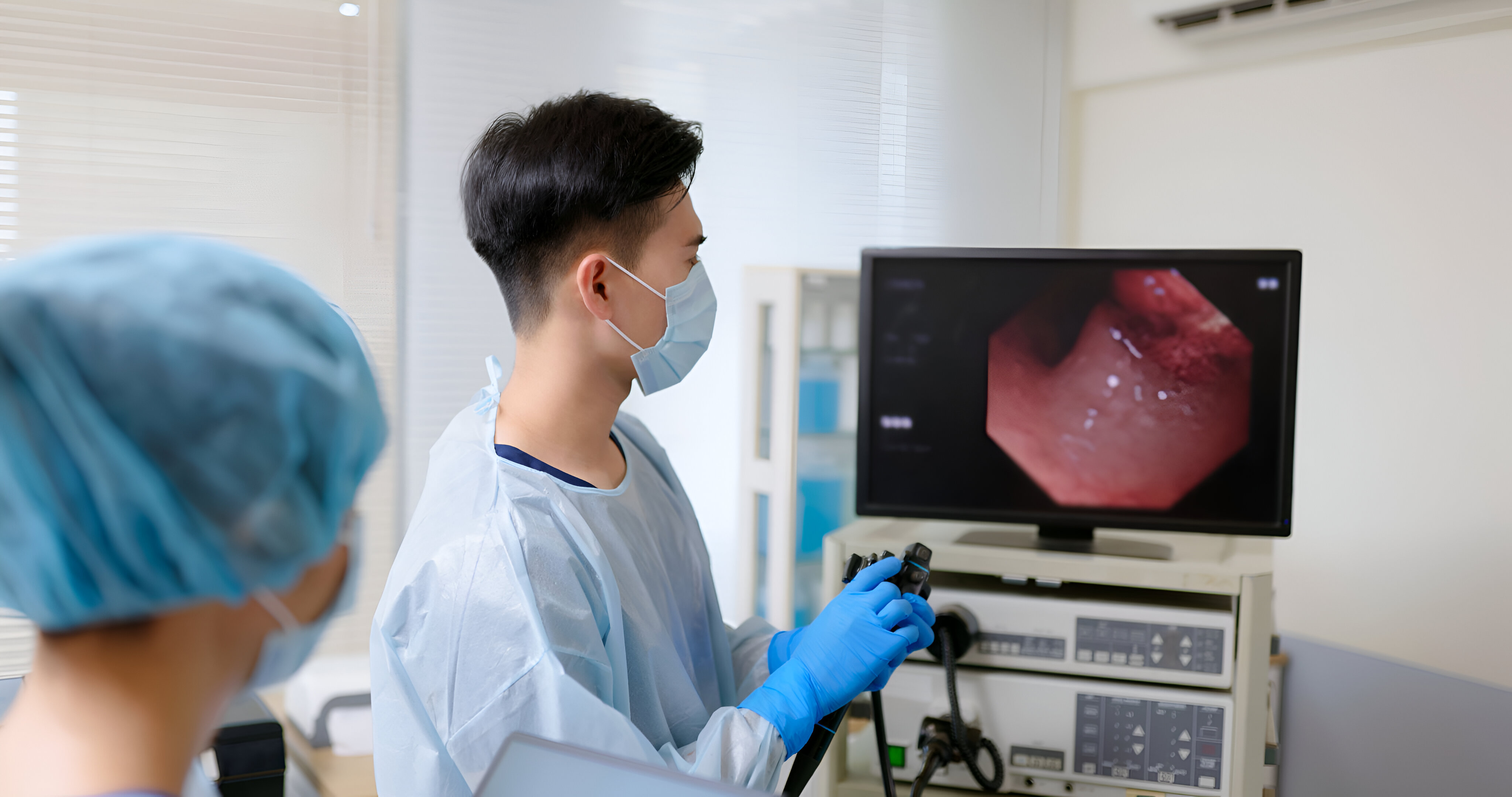
An endoscopy is a medical procedure that helps doctors visualize the inside of the body using a specialized tool called an endoscope. An endoscope is a flexible tube equipped with a camera and a light source to display images on a monitor. This procedure is minimally invasive, meaning it requires minimal incisions because the endoscope is inserted through natural openings like the mouth or anus, or through tiny incisions. Endoscopy is frequently used for diagnosis, treatment, and screening of various medical conditions.

The procedure is performed by inserting the endoscope through a body opening; for example, through the nose to examine the respiratory tract, or through the mouth to view the upper digestive tract. However, in certain types of endoscopy, such as laparoscopy or arthroscopy, the scope is inserted through small incisions in the skin.
Purpose of Endoscopy
Endoscopy allows doctors to directly view internal organs without making large incisions or performing open surgery. Generally, this procedure is conducted if a patient exhibits specific symptoms.
The goals of an endoscopic examination include:
Examining the esophagus, stomach, and small intestine to detect ulcers, GERD, inflammation (gastritis), or tumors.
Examining the anus, rectum, and colon to detect polyps, colon cancer, or inflammatory bowel disease.
Examining the respiratory tract for nasal polyps, chronic sinusitis, or throat issues.
Removing polyps in the stomach or colon.
Managing bleeding from gastric ulcers or esophageal varices.
Taking tissue samples (biopsy).
Conditions Requiring Endoscopy
Several conditions may necessitate an endoscopic examination:
Chronic heartburn or long-term upper abdominal discomfort that does not improve with medication.
Difficulty swallowing.
Chronic nausea or vomiting.
Gastrointestinal bleeding.
Upper abdominal discomfort due to acid reflux or indigestion (dyspepsia).
Gastric ulcers.
Gastroesophageal Reflux Disease (GERD).
Types of Endoscopic Procedures
The type of endoscopy performed depends on the part of the body being examined:
Gastroskopi (EGD = EsophagoGastroDuodenoscopy)

Examines the esophagus, stomach, and small intestine.
Kolonoskopi (colonoscopy)

Examines the large intestine (colon), rectum, and anus; highly sensitive (95%) in detecting colon cancer
Bronkoskopi (bronchoscopy)

Monitors the airways and lungs.
Sistoskopi (cystoscopy)

Examines the bladder and urethra.
Kolposkopi (colposcopy)

Monitors the cervix; used to diagnose cervical dysplasia and cancer.
Laringoskopi (laryngoscopy)

Visualizes the throat and vocal cords for disorders like polyps or cancer.
Torakoskopi (thoracoscopy)

Examines the space between the chest wall and lungs or performs lung biopsies.
Laparoskopi (laparoscopy)

A minimally invasive surgery to view organs within the abdominal cavity.
Endoscopic Retrograde Cholangiopancreatography (ERCP)

Combines endoscopy and X-rays to treat disorders of the bile duct, gallbladder, and pancreas.
Advantages of Endoscopy
Minimally invasive compared to traditional surgery.
Provides a direct visual of organ conditions.
Can be used for both diagnosis and therapy.
Short recovery time.
Preparation Before Endoscopy
Preparation varies by procedure but typically takes 15–60 minutes. Common steps include:
Fasting: Patients are usually asked not to eat or drink for several hours prior.
Medication Adjustment: Certain medications, especially blood thinners, may need to be temporarily paused.
Bowel Prep (Colonoscopy): Patients must take laxatives or a special solution to clear the intestines.
During the Procedure
The doctor performs a physical exam and necessary supporting tests.
The doctor explains the process to the patient.
Anesthesia is administered for patient comfort.
The endoscope is inserted via the mouth, rectum, or incision.
The doctor monitors real-time images of the internal organs on a screen.
Recovery and Risks
After the Procedure:
Patients are monitored until the anesthesia wears off; most go home the same day.
Patients should not drive or perform heavy activities immediately due to lingering sedative effects.
Initial results may be discussed immediately, while biopsy results usually take a few days.
Risks and Complications: While generally safe, risks (though rare) include post-biopsy bleeding (approx. 0.18%), persistent pain, fever, or swelling at the incision site.
When to Seek Medical Help: Contact a doctor immediately if you experience:
Severe abdominal pain.
Difficulty breathing.
Persistent vomiting or bleeding.
Conclusion
Endoscopy is a vital medical procedure used to diagnose and treat various conditions with minimal risk. With proper preparation, it is a safe and effective tool for most patients.
Referensi:
Kang, JHE., et al. (2021). Systematic review with meta-analysis: the prevalence of post-colonoscopy colorectal cancers using the World Endoscopy Organization nomenclature. Aliment Pharmacol Ther, 2021 Nov;54(10):1232-1242. https://pubmed.ncbi.nlm.nih.gov/34587323/
Lv, Xiu-He., et al. (2025). Colonoscopy-related adverse events in the 21st century: An updated systematic review and meta-analysis. Am J Gastroenterol 2025 Mar 27. https://www.asge.org/home/resources/publications/journal-scan/issue/systematic-review-and-meta-analysis-provides-updated-picture-of-adverse-events-after-colonoscopy?utm_source=chatgpt.com